The peptide boom has pulled a lot of new names into the market. More than eighty peptide drugs are approved and over two hundred more sit in clinical development, and the therapeutics market that sits on top of them is forecast to move from roughly USD 46 billion toward USD 100 billion within the decade. That growth is good news if you buy peptides, but it also means the supplier list is longer and more uneven than it used to be. This guide covers ten leading peptide suppliers in 2026 and, just as usefully, how to judge one against your own project.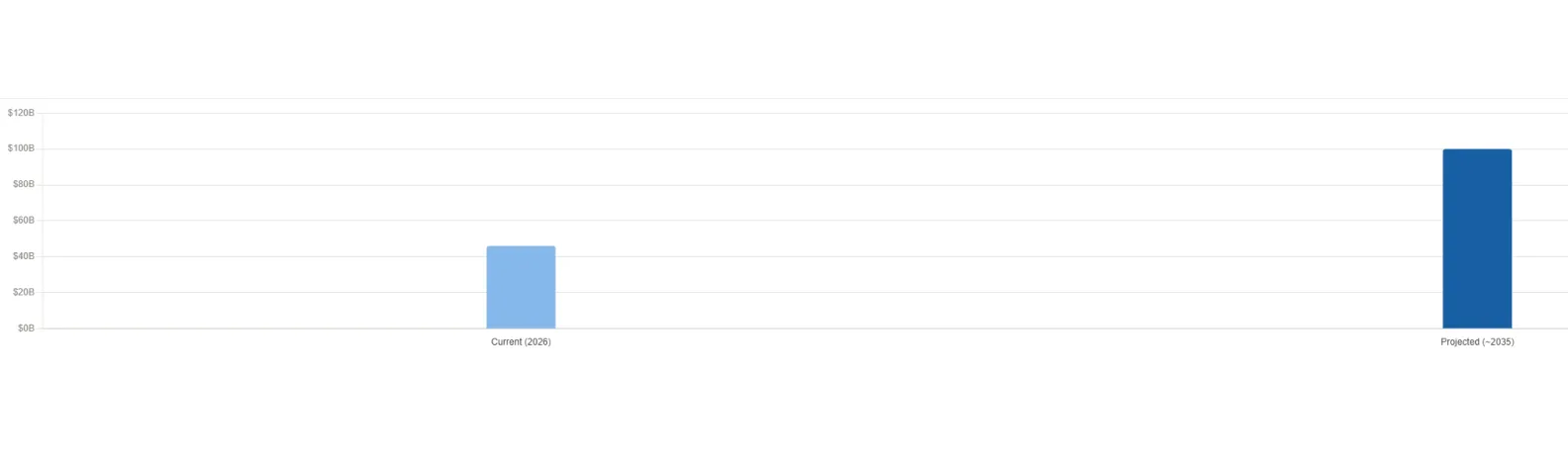
What separates a strong peptide supplier
Peptide suppliers are not interchangeable. A vendor that is perfect for milligram research batches may be the wrong choice for a GMP API, and the other way round — how a peptide is actually synthesised partly determines which vendors can handle it. Before comparing names, it helps to fix the criteria that actually matter.
| What to check | What good looks like |
| Capability range | Custom synthesis, modification (lipidation, cyclisation, PEGylation, labelling), large-scale production, and CDMO under one roof |
| Quality and QC | HPLC purity and MS identity as standard, a batch certificate of analysis, peptide-specific impurity control, and GMP where the project needs it |
| Scale and capacity | A clear path from milligrams to kilograms without changing vendor or facing a sudden jump in cost |
| Documentation | COA, analytical data, and regulatory support that match the stage of the program |
| Track record | Published citations, patents, years focused on peptides, and reference customers |
One point sits behind all of these: continuity. A peptide that moves from discovery to the clinic should not have to change hands halfway through, because every vendor switch means re-validating the chemistry and the impurity profile. Suppliers that cover research, modification, scale-up, and manufacturing in one place remove that risk.
Ten leading peptide suppliers in 2026
The list below spans different segments, from large pharmaceutical CDMOs to research-focused specialists and full-service providers. It is ordered roughly by scale and breadth rather than as a strict quality ranking, since the right pick depends on what you need — and often on what the peptide actually costs to make at your target scale. Match the supplier to the job.
- Bachem (Switzerland) With more than fifty years focused on peptides and oligonucleotides, Bachem is the reference point for pharmaceutical peptide manufacturing. It has supplied active ingredients for a large share of approved peptide drugs and runs facilities held to USFDA and Swissmedic standards. Best for pharma clients needing proven GMP from clinical trials through commercial supply.
- GenScript (US and China) A large, publicly listed life-science platform that offers custom peptides at research and GMP grade, with microwave-assisted synthesis and HPLC and MS data as standard. Best for high-throughput research peptides, neoantigen and library work, and buyers who value a publicly accountable vendor.
- Thermo Fisher Scientific (US) The largest life-science supplier overall, with peptides sitting alongside a vast catalog of reagents and instruments. Best for buyers who want catalog peptides plus one-stop global supply and logistics.
- PolyPeptide Group (Europe and US) An FDA-registered, cGMP peptide manufacturer serving branded pharma and biotech, with solid-phase synthesis and purification at commercial scale. Best for late-stage and commercial peptide API supply.
- CPC Scientific (US) A peptide and oligonucleotide CRDMO that has passed multiple FDA inspections and supports customers across many countries, with conjugate chemistry such as PDCs and RDCs and multi-kilogram batches. Best for preclinical to early-clinical API scale-up.
- Biosynth (US and Europe) Built from several established peptide brands, Biosynth pairs a very large catalog with capability in complex, cyclic, and constrained peptides across multiple sites. Best for broad catalog sourcing combined with complex peptide projects.
- AnaSpec (US) Part of the Kaneka group, AnaSpec runs ISO-class cleanrooms and specialises in fluorogenic and FRET substrates, heavily modified peptides, and neuroscience sequences. Best for assay and substrate peptides and demanding modifications.
- JPT Peptide Technologies (Germany) A specialist in peptide libraries, peptide microarrays, and immune-monitoring tools, certified to ISO 9001. Best for immunology, epitope mapping, and library-scale programs.
- Creative Peptides (US) A full-service peptide provider spanning custom synthesis, modification, large-scale work, and catalog products. Best for buyers who want custom, modified, and catalog peptides from a single vendor.
- SynPeptide (China) A specialist peptide CRO/CDMO operating since 2013, covering custom synthesis, modification, large-scale production, and drug-development services, with a catalog that spans cosmetic, drug, cyclic, and reference-standard peptides. Its work is cited in more than 15,600 published papers. Best for teams that want end-to-end peptide support from research to API with cost-effective scale.
Why SynPeptide could be your peptide partner
SynPeptide (Nanjing SynPeptide Biological Technology) has focused on peptide chemistry since 2013 and supplies customers in more than one hundred countries. It runs three platforms, covering life-science products and services, biopharma CDMO, and industrial synthetic biology, and holds more than fifty granted patents, with over one hundred fifty staff and a large share holding advanced degrees. Its peptides appear in over 15,600 published papers, which is a useful signal of consistency across many labs.
For buyers weighing suppliers, the practical strengths are:
- End-to-end coverage, from custom peptide synthesis and peptide modification through large-scale peptide synthesis and peptide CDMO work, so a molecule can advance without changing vendor.
- Synthesis across a 2 to 200 amino-acid range using solid-phase, microwave-assisted, and fragment-condensation methods.
- A broad catalog of catalog peptides spanning cosmetic, drug, cyclic, and reference-standard peptides, alongside made-to-order sequences.
- A modification toolbox that includes cyclisation, PEGylation, lipidation, phosphorylation, fluorescent and isotope labelling, and carrier conjugation.
- HPLC and mass-spectrometry quality control with a certificate of analysis on every batch, and cost-effective capacity for bulk supply.
SynPeptide supplies peptides as research and manufacturing materials to organisations. Their use in any finished product, and the approvals that go with it, remain the responsibility of the buyer.
How to make the final call
Shortlist two or three suppliers, then ask each for the same thing: a quote, a representative certificate of analysis, purity and impurity data, the lead time, and the scale they can hold if the project grows. A supplier that answers clearly and shares real analytical data is usually the safer partner. Price matters, but lot-to-lot consistency and the ability to scale tend to decide the total cost over a project's life.
Talk to our peptide team
Comparing peptide suppliers for an upcoming project? Send us your sequence or catalog number, the purity, and the scale you need, and we will come back with specifications and a quote. Reach the team at peptide@synpeptide.com.
FAQ
How do I choose a peptide supplier?
Match the supplier to the stage of your work. For research peptides, look for purity, HPLC and MS data, and fast turnaround. For a drug program, add GMP capability, impurity control, and a clear scale-up path. In both cases, check lot-to-lot consistency, documentation, and track record before price.
What is the difference between a peptide supplier and a peptide CDMO?
A peptide supplier sells peptides, often from a catalog or by custom synthesis at research scale. A peptide CDMO adds development and manufacturing, including process development, method validation, and GMP production. Some companies do both, which lets a project move from research to commercial supply without switching vendors.
Should I use a catalog peptide or a custom one?
Use a catalog peptide when the sequence you need is already listed, since it is usually faster and cheaper. Order a custom peptide when you need a specific sequence, modification, purity, salt form, or scale that the catalog does not cover. Many suppliers offer both.
What quality documents should a peptide supplier provide?
At a minimum, a certificate of analysis with HPLC purity and a mass-spectrometry identity result for the specific lot. For regulated work, expect fuller impurity profiling, stability data, and phase-appropriate documentation. If a supplier cannot share these, treat it as a warning sign.
Does the country where a peptide is made matter?
For research use, quality data matters more than location. For GMP-sensitive programs, the site and its regulatory standing do matter, so ask where synthesis and release testing happen and what standards the facility meets. Reputable suppliers will tell you.
-

Synpeptide
peptide-focused CRO/CDMO company
The SynPeptide Research Team brings together scientists specializing in peptide synthesis, purification, and analytical characterization. Drawing on hands-on laboratory experience across custom and catalog peptides, the team shares evidence-based insights for researchers, formulators, and product developers. All content is reviewed against current scientific literature and internal quality-control data, reflecting SynPeptide's commitment to accuracy, reproducibility, and the responsible communication of peptide science.